

Gut Health and Performance: Why Your Workouts Start in Your Stomach
The quick answer
Your gut has way more to do with your training than most people realize. The trillions of microbes living in there break down your food, pull nutrients into your body, keep inflammation in check, and run a big chunk of your immune system, all of which feed straight into your energy, recovery, and endurance. Feed that gut well (fiber, fermented foods, and pre- and probiotics) and you recover faster and train better. Neglect it and you stall.
In this article
What people actually mean by “gut health”
Here's the thing: you're not just feeding yourself when you eat. You're feeding roughly 100 trillion microbes living in your gut, and that little civilization is called your microbiome. Keep the good bugs happy and well-fed, and they pay you back in digestion, energy, and a calmer immune system. Starve them or drown them in junk, and things get cranky in there.
For years we treated the gut like a simple pipe that food passes through. It's nothing close to that. It's more like a busy factory floor that has a real say in how you feel, how you recover, and yes, how you perform.
How your gut actually affects performance and recovery
This isn't wellness fluff. Research keeps linking the makeup of the gut microbiome to physical performance and recovery, especially for endurance. Here's what your gut is quietly doing for your training:
| What your gut does | Why it matters for training |
|---|---|
| Breaks down and absorbs nutrients | You actually use the protein and carbs you eat instead of wasting them |
| Makes short-chain fatty acids | Extra fuel for your cells and less low-grade inflammation |
| Runs most of your immune system | Fewer sick days, so you train consistently instead of in stops and starts |
| Helps regulate inflammation | Faster recovery between hard sessions |
Put simply: you can eat all the protein in the world, but if your gut isn't absorbing it well, you're leaving gains on the table. A healthy gut is what turns the food you eat into the fuel and building blocks your body can actually use.
Signs your gut might be holding you back
Most people don't connect these dots, but if a few of these sound familiar, your gut is worth a look:
- Bloating or stomach cramps mid-run or mid-workout
- Feeling wiped out even when your training and sleep are on point
- Catching every cold that goes around, so you're always missing sessions
- Eating plenty of protein but not seeing the recovery or muscle you'd expect
- The bathroom being unpredictable, in either direction
None of these are a diagnosis, and if something's really off you should talk to your doctor. But a lot of the time, the fix starts on your plate.
How to feed your gut (the simple version)
You don't need a fancy protocol. Give the good bugs what they want and get out of their way:
- Fiber, and lots of it. Aim for 30g or more a day from vegetables, fruit, whole grains, and legumes. Fiber is the main food source for your gut bacteria.
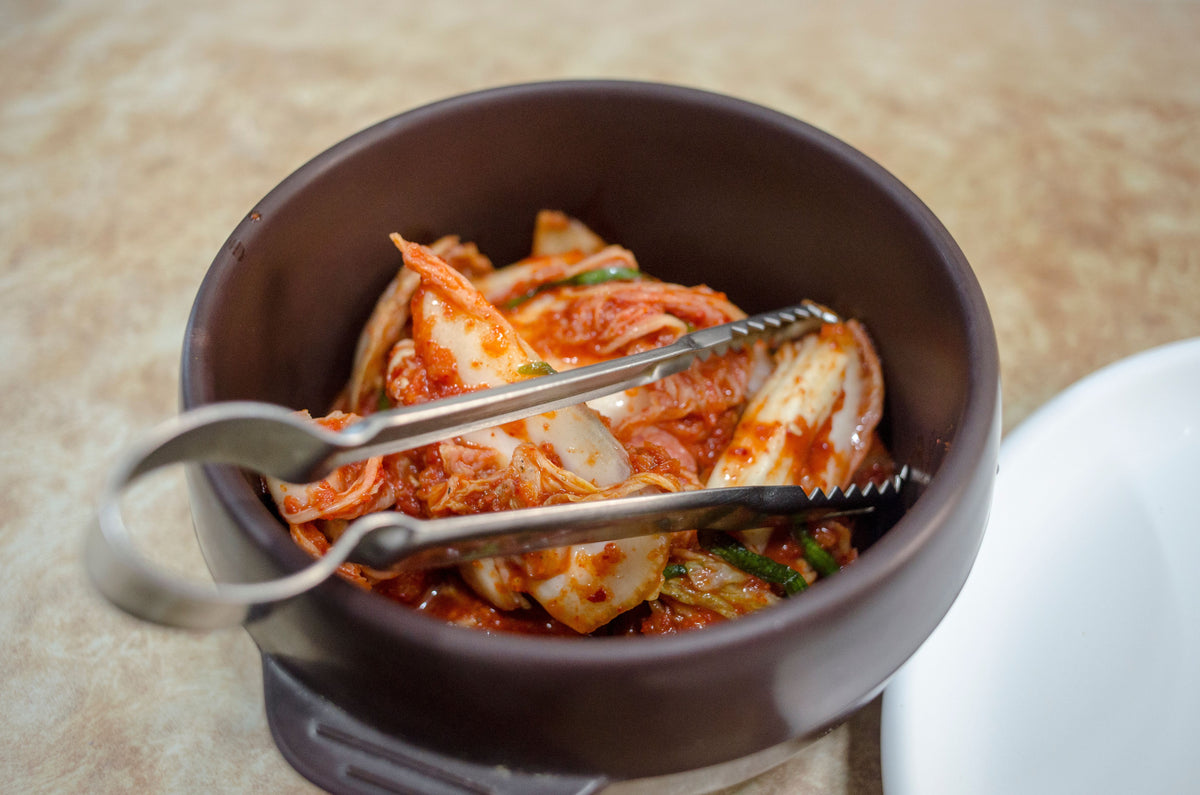
- Fermented foods. Yogurt, kefir, kimchi, sauerkraut. These bring live cultures to the party.
- Prebiotics. Onion, garlic, oats, bananas, and mushrooms feed the bacteria you already have.
- Ease up on the junk. Ultra-processed food and a river of alcohol are what the bad bugs love. You don't have to be perfect, just tilt the balance.
- Hydrate and sleep. Both quietly shape your gut too. Boring advice, still true.
Where your coffee fits into all this
Now, if you're thinking ‘wait, isn't coffee bad for my gut?’ hang on. In normal amounts, coffee is fine for most people, and it even carries polyphenols that your gut bugs seem to like. The trick is what you put in it.
That's why we built gut support right into OrganiiLand Protein Mushroom Coffee. It's real USDA organic ground coffee with a pre and probiotic blend to support your gut, five functional mushrooms (whose fiber acts as a prebiotic), and 6g of collagen to support the gut lining and your connective tissue. Zero sugar, zero sweeteners, since sugar is one of the things your bad bugs love most. If you want the recovery angle, our guide to what to eat after a workout pairs nicely, and Lion's Mane coffee for focus covers the mushroom side.

Gut support in your cup
OrganiiLand Protein Mushroom Coffee
Real USDA organic ground arabica you brew, with a pre + probiotic blend, five functional mushrooms, 6g collagen, and L-theanine. Zero sugar, no sweeteners. 30 servings.
Frequently asked questions
Does gut health really affect athletic performance?
Yes. Research links the gut microbiome to nutrient absorption, immune function, inflammation, and recovery, and the evidence is strongest for endurance. A healthier gut generally means better fuel use and faster recovery.
How do I improve my gut for training?
Eat more fiber (30g or more a day), add fermented foods, feed your existing bacteria with prebiotics like onion, garlic, oats, and mushrooms, cut back on ultra-processed food, and get enough sleep and water.
How long does it take to improve gut health?
Your microbiome starts shifting within a few days of changing your diet, but give it a few weeks of consistency before you judge how you feel and train.
Can probiotics help recovery?
Studies suggest probiotics may support recovery, nutrient absorption, and immune function, and can ease exercise-related gut issues in some people. They work best alongside a fiber-rich diet, not instead of one.
Is coffee bad for your gut?
For most people, moderate coffee is fine and even brings polyphenols the gut likes. What usually hurts the gut is the sugar and sweeteners piled on top, which is exactly what we leave out.
Train from the inside out
Real coffee with a pre + probiotic blend, five mushrooms, and 6g collagen. Gut support, no sweeteners, no crash.
Try Mushroom Coffee →USDA organic · pre + probiotic · 5 mushrooms · 6g collagen · zero sweeteners
Sources: Mohr AE et al., Gut microbiota, probiotics and physical performance in athletes and physically active individuals (Nutrients). The performance gut: optimizing performance in high-level athletes, a systematic scoping review (Frontiers in Sports and Active Living, 2025).
*These statements have not been evaluated by the U.S. Food and Drug Administration. This product is not intended to diagnose, treat, cure, or prevent any disease. This article is educational and not a substitute for advice from your healthcare provider.