

Beginner Strength Training: How to Actually Start Building Muscle
The quick answer
To start building muscle as a beginner, do 3 full-body strength workouts a week built on 5 basic movement patterns, for 2 to 3 sets of 8 to 12 reps each. Add a little weight or one more rep almost every session (that's progressive overload). Rest 1 to 2 days between workouts, and eat about 0.7 to 1g of protein per pound of body weight. Most beginners get visibly stronger within 4 to 6 weeks.
In this article
Why beginners build muscle faster than anyone
Here's a strange bit of good news: the greener the beginner, the faster the gains. Untrained muscle reacts hard to a brand-new stimulus, so strength and size show up quicker in your first few months than they ever will again. Lifters call it newbie gains, and it's very real. I've watched brand-new clients add weight to every lift, week after week, grinning like they found a cheat code.
The sad part? How many people burn that window on a complicated six-day split they saw online. You don't need it. A handful of basic lifts, done consistently, with a little more each week. That's the whole plan, and this guide walks you through it.
The 5 movement patterns that cover your whole body
Forget memorizing forty exercises. Every workout I write for a beginner is built from five simple movement patterns. Pick one exercise for each and you've trained your whole body in a single session.
| Pattern | Beginner exercise | Works |
|---|---|---|
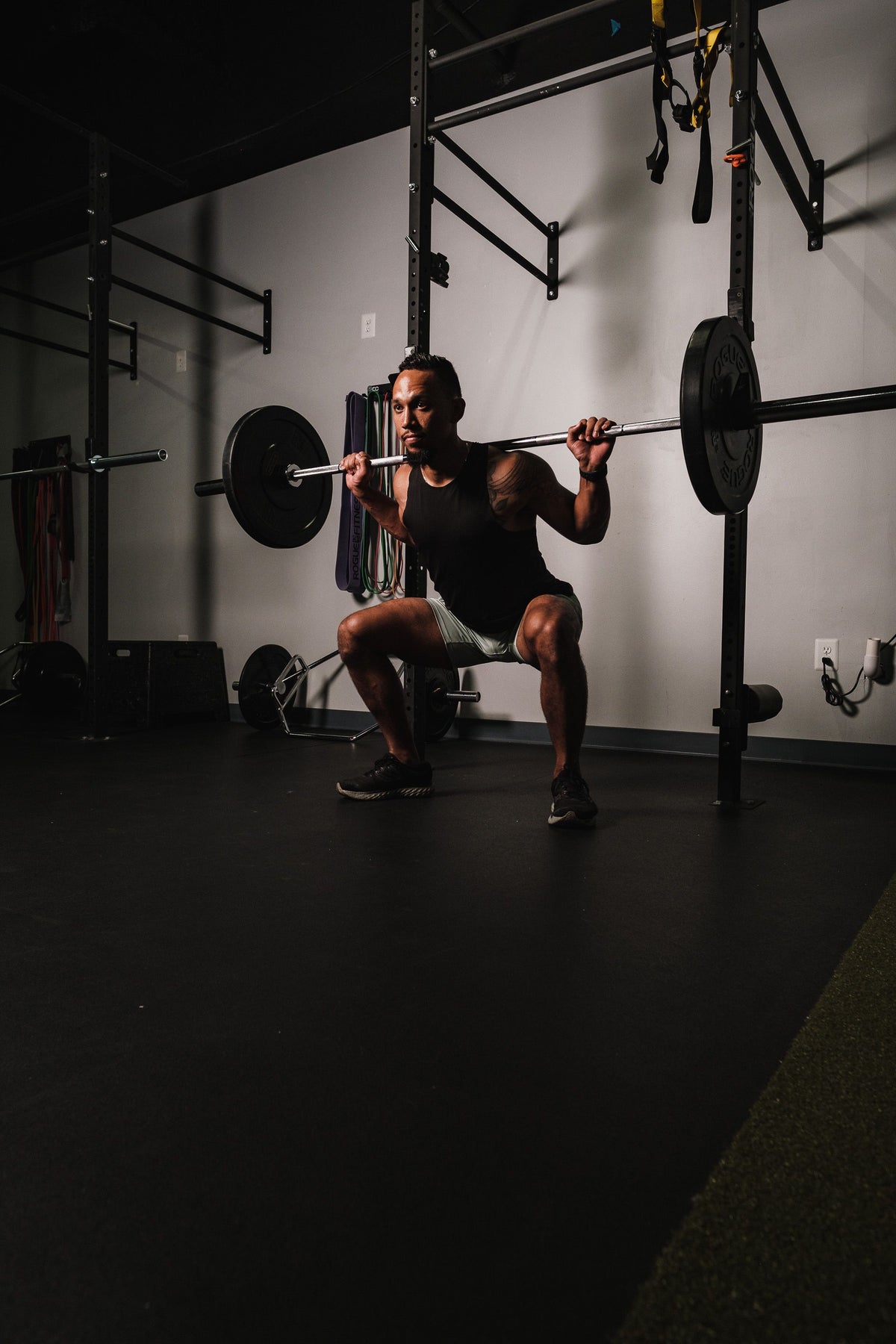
| Squat | Goblet squat or barbell back squat | Legs, glutes, core |
| Hinge | Romanian deadlift or hip thrust | Hamstrings, glutes, back |
| Push | Dumbbell or barbell bench press | Chest, shoulders, triceps |
| Pull | Dumbbell row or lat pulldown | Back, biceps |
| Carry / core | Farmer's carry or plank | Core, grip, stability |
These are compound movements, which is just a fancy way of saying each one works several muscle groups at once. For a beginner that's gold: more muscle trained per minute, and strength that actually shows up when you're hauling groceries or a toddler up the stairs.
Your simple 3-day full-body plan
Three full-body sessions a week, with a rest day in between, is where I start almost everyone. It hits each muscle often enough to grow while still leaving room to recover. A week looks like this:
Monday, Wednesday, Friday (or any 3 non-consecutive days):
- 1 squat-pattern exercise, 3 sets of 8 to 12
- 1 hinge-pattern exercise, 3 sets of 8 to 12
- 1 push-pattern exercise, 3 sets of 8 to 12
- 1 pull-pattern exercise, 3 sets of 8 to 12
- 1 carry or core exercise, 2 to 3 sets
Rest 1 to 2 minutes between sets, a bit longer for the heavy lifts. Warm up first with 5 minutes of easy movement and a light set or two. The whole thing takes about 45 minutes, and that's the entire session. Resist the urge to bolt on ten extra moves because they looked cool on your feed.
Progressive overload: the one rule that never changes
Progressive overload just means doing a little more over time, whether that's more weight, more reps, or cleaner form, so your muscles always have a reason to change. It's the engine behind getting stronger, and it's refreshingly simple to run.
Here's the double-progression method I hand every beginner:
- Pick a weight you can lift for about 8 reps with good form.
- Each session, try to add a rep until you hit 12 on all your sets.
- Once you can do 12 on every set, add a little weight (2 to 5%) and drop back to 8 reps.
- Repeat, more or less forever.
Pick a starting weight that leaves you 2 to 4 reps in the tank. It should feel hard, not a form-wrecking grind. And write your lifts down each week. Nothing keeps you honest like last week's numbers staring back at you.
Fueling your lifts: protein and a smart pre-workout
Training tells your body to change. Food hands it the raw material. For a beginner, two things matter more than the rest.
Protein. Muscle is literally built from it, so aim for roughly 0.7 to 1g per pound of body weight per day, spread across your meals. Not sure of your number? Our guide to how much protein you actually need does the math, and when to take it covers timing.
A little caffeine before you train. Coffee is a cheap, well-studied pre-workout that helps you push a bit harder, which we get into in our guide to coffee as a pre-workout. That's where my morning cup earns its keep: it wakes me up and quietly knocks out a big chunk of my daily protein before I've even left the kitchen.

Fuel the work
OrganiiLand Protein Coffee
Real arabica coffee with 22g grass-fed whey, 4.5g BCAAs, and about 40mg of natural caffeine. Zero sugar, no sweeteners. Your pre-workout and your protein in one 15-second cup.
Common beginner mistakes to skip
- Program hopping. Switching plans every week is the fastest way to go nowhere. Pick one and run it for at least 8 to 12 weeks.
- Ego lifting. Loading a bar you can't actually control just wrecks your form and your progress. Leave a couple of reps in the tank.
- Skipping the lower body. Squats and hinges drive the most total-body growth. Don't turn into the guy who only trains what shows in the mirror.
- Doing too much. More exercises isn't better. Consistency on the basics beats a marathon workout you dread and quietly skip.
- Under-eating protein. You can train perfectly and still stall if you're not fueling the rebuild.
Frequently asked questions
How should a beginner start strength training?
Begin with 3 full-body workouts a week built on five basic patterns: squat, hinge, push, pull, and a carry or core move. Do 2 to 3 sets of 8 to 12 reps, start light, focus on form, and add a little each week.
How many days a week should a beginner lift?
Three non-consecutive days is ideal. It trains each muscle group often enough to grow while leaving 1 to 2 rest days for recovery, which is when muscle actually gets built.
How fast will I see results?
Most beginners feel stronger within 2 to 4 weeks and see visible changes in 6 to 8 weeks, thanks to the fast newbie-gains phase, as long as training stays consistent and protein is adequate.
Should beginners use machines or free weights?
Both work. Machines make it easier to learn a movement safely, while free weights build more stabilizing strength. A mix is perfectly fine, and consistency matters more than the tool either way.
How much protein do I need to build muscle?
Around 0.7 to 1g per pound of body weight per day, spread across meals. A protein-forward breakfast is the easiest place for most beginners to close the gap.
Fuel your first 12 weeks
A cleaner pre-workout and 22g of protein in one cup. Real coffee, grass-fed whey, zero sugar.
Try Protein Coffee →22g grass-fed whey · ~40mg caffeine · zero sugar · no sweeteners
Sources: Gold's Gym, Progressive Overload Training 101: A Beginner's Guide. American College of Sports Medicine, resistance-training guidelines for healthy adults (2 to 3 sets, 8 to 12 reps, 2 to 3 days per week).
*These statements have not been evaluated by the U.S. Food and Drug Administration. This product is not intended to diagnose, treat, cure, or prevent any disease. This article is educational and not a substitute for advice from your healthcare provider or a qualified coach.